
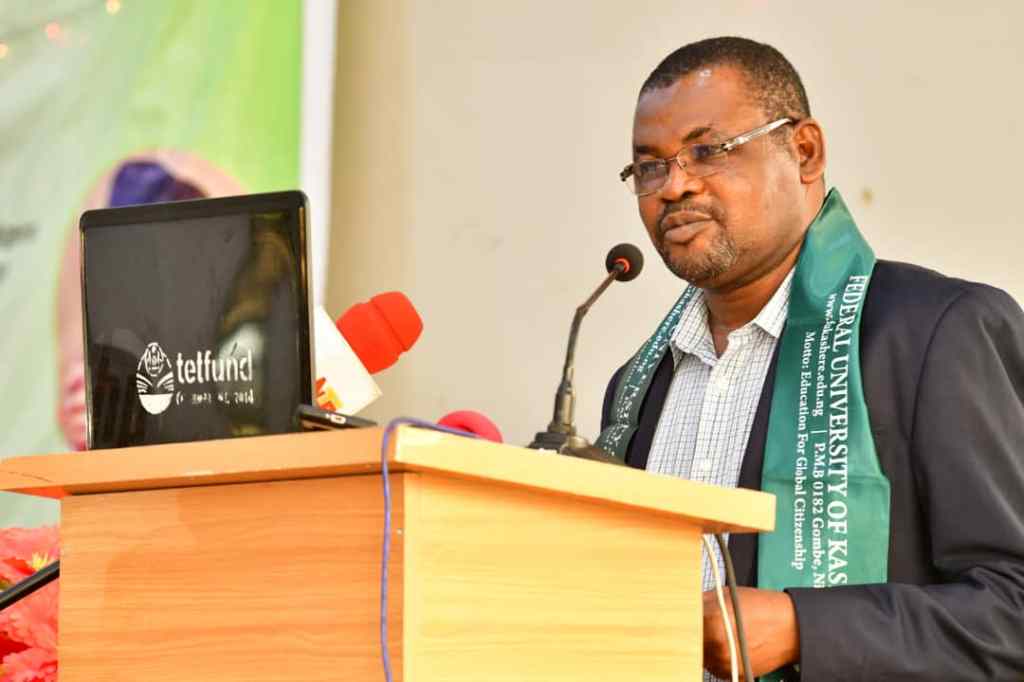
UNIVERSITY MANAGEMENT IN AN INSURGENCY RIDDEN ENVIRONMENT:EXPERIENCES OF UNIVERSITY OF MAIDUGURI DURING THE BOKO HARAM UPRISING
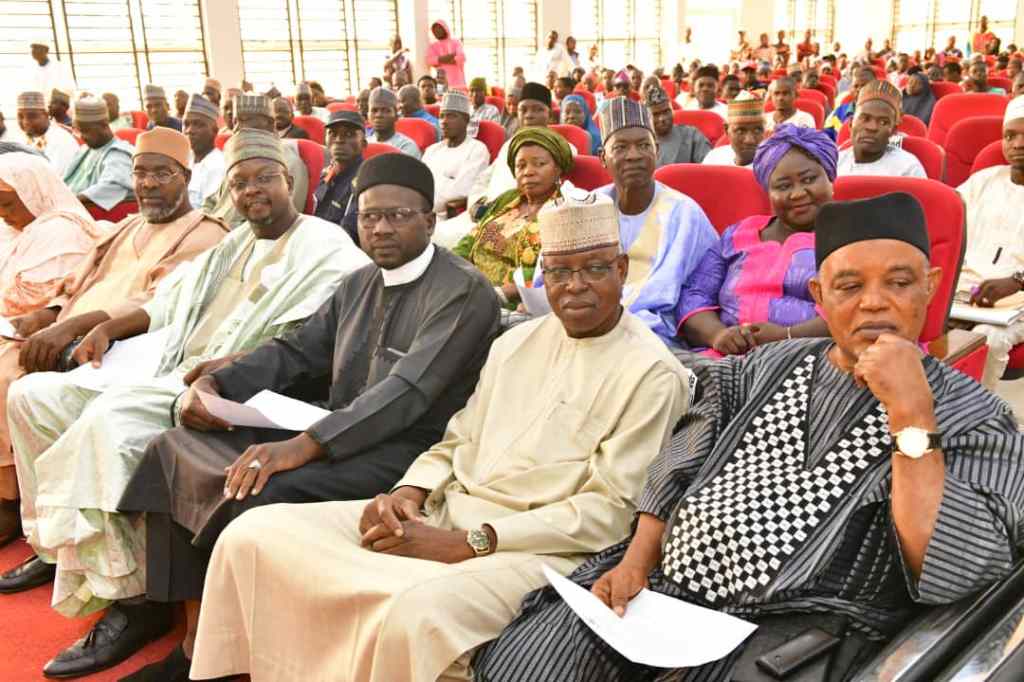
1.0 Protocol
1.1 INTRODUCTION
Like all aspects of human endeavour, the management of state affairs otherwise, popularly known as governance, requires a peaceful, rancour-free and conducive environment to thrive. Throughout human history, the major challenges faced by public office holders are how to organize, operate and manage human beings and resources in communities, states, nations and indeed institutions, devoid of conflict.
The search for the ideal state of affairs since the beginning of modern civilization has lead to the postulation of various conspiracy theories, ideologies, strategies and methods. Some of these have worked to solving man’s ever changing and dynamic issues and some don’t seem to work. Scholars of social and political science have made attempts to classify these political ideologies/strategies as socialism, communism, capitalism and so on.
These utopian ideologies were experimented and are still being experimented in various parts of the world. But in all these experimental adventures one stand very clear; the human beings as a social and intelligent creature, is a very difficult variable/creature to predict, control, manipulate or satisfy.
Consequently, conflicts of interest has remained the vain of most human existence and settlements which remain the major factor responsible for the destruction and reconstruction of nations, communities, societies and their institutions throughout human history.
These conflicts mostly arise because of divergent views and interest intersect of individuals, groups, communities and nations which find expression in armed struggle, civil unrest, insurgency and even full scale wars.
Sadly, the overall outcome of these situations is the disruption and destruction of developmental processes and the ultimate retardation of all indices of human development and progress.
2.0 UNIVERSITY GOVERNANCE IN AN INSURGENCY
Definition of Terms:
Governance in general:-
The word “governance” came from the Latin word “gubernae” or more originally from the Greek word “kubernaein” which means to “Steer”.
Based on its etymology, governance refers to the manner of steering or governing, or of directing and controlling, a group of people or a state.
Governance is essentially related to politics, since politics is often defined as the act of governance; just as politics talk about governments, institution, power, order, and the ideals of justice.
Governance also deals with the public sector, power structures, equity, and ideals of public administration. Nevertheless, they are distinct from each other in the sense that politics is broader than governance.
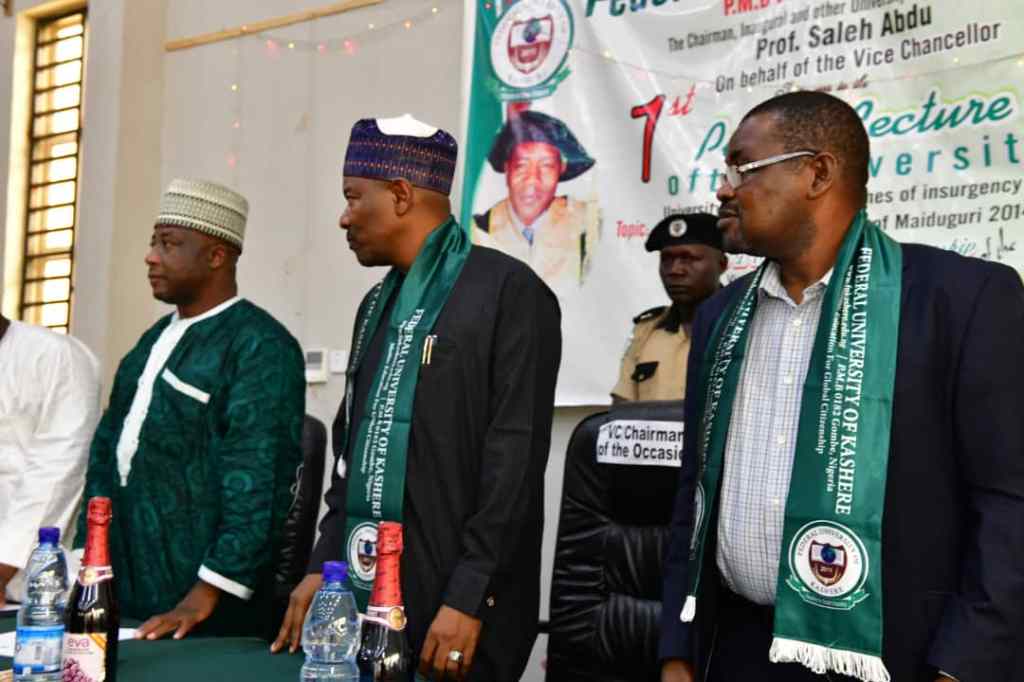
Concept of University Governance:-
Governance in University setting is commonly defined as the exercise of power or authority by the Chief Executives/Vice Chancellors for the wellbeing of their staff and students. It is the complex process whereby some sectors of the University wield power and enact and promulgate policies which directly affecthuman and institutional interactions, academic, and economic and social developments. The power exercised by the participating sectors of the University is always for the common good, as it is essential for demanding respect and cooperation from the staff and students. As such a great deal around University governance is the proper and effective utilization of resources.
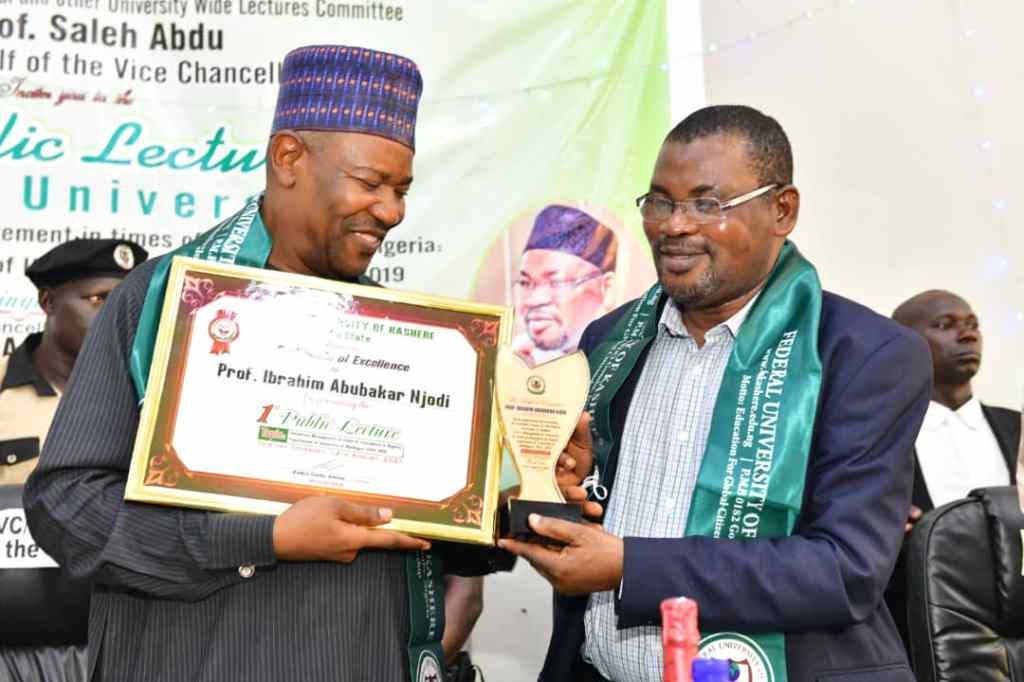
Insurgency:-
Insurgency is from the Latin word “insurgentem”, literally meaning “to rise against”. In this sense, an insurgent is considered as a fighter who rises against the people in power. Often insurgents are considered as terrorists because they use violence to intimidate people. Insurgency is therefore an organized movement aimed at the overthrow of a constituted government through the use of subversion and armed conflict or struggle. It is an act of rebellion against a constituted authority.
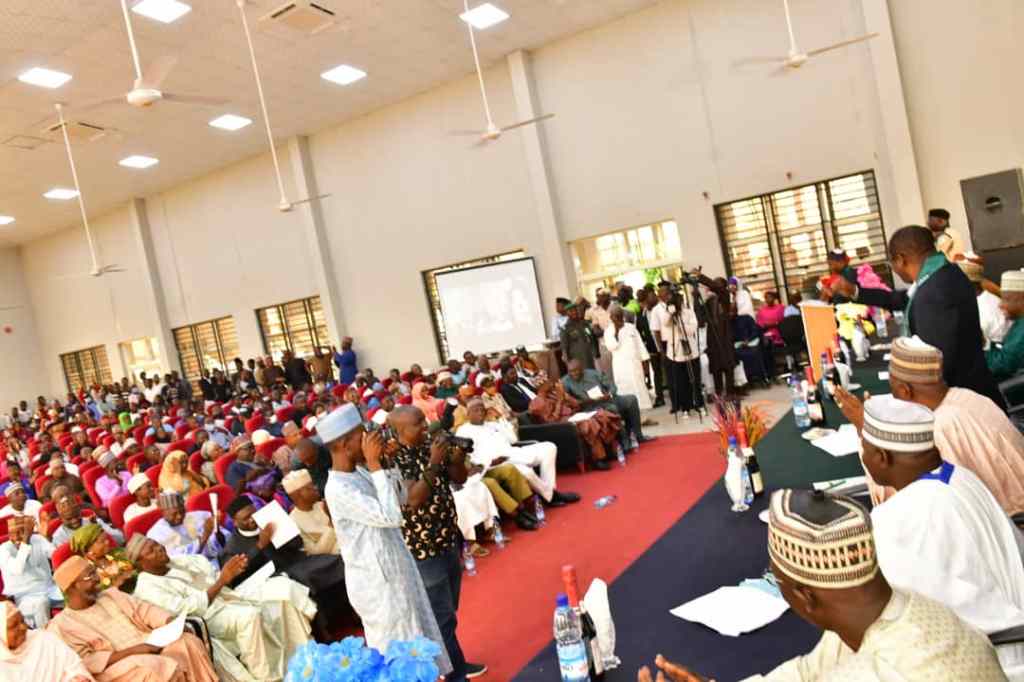
Mr. Chairman, distinguished personalities, permit me to categorically state that Governing the University of Maiduguri under an insurgence ridden environment was like “Changing tyres on a moving vehicle” or “Erecting canopies in the vortex of a cyclone”.
The Boko Haram insurgency effectively started in 2009 on a protest against Government’s policy to impose the use of crash helmet by motor cycle riders. A clash between the protesters and security agencies resulted in the death of some motor cycle riders who were believed to be members of an Islamic group led by Muhammad Yusuf. The protest which turned violent and deadly reached its peak in 2015.
The purpose of this presentation is however, not to delve into the history of Boko Haram insurgency but rather, to deal with lessons learnt and share with the public my experiences as the Vice Chancellor during the unfortunate development in terms of challenges of governance as it affect the overall running of the University.
3.0 EXPERIENCES AND LESSONS FROM THE BOKO HARAM UPRISING IN THE NORTH-EAST REGION
The experience of governance or the management of University of Maiduguri affairs in the face of widespread and spontaneous terrorist’s attacks was, to say the least, a very traumatizing and mind boggling one. No doubt, the crisis created a whole gamut of challenges in which academic activities and development were almost totally arrested or halted due to the absence of peace. These challenges are broad based, some of which were:-
Elimination of the ease of governance and doing business in the University (Governing Council, Senate and other major organs).
Dislocation of Research and other academic activities.
Dislocation of staff and students from the town into the campus (Housing/Hostel problems).
Destruction of socio-economic infrastructure.
Loss of income to the University and staff members.
Increase in the cost of governance.
Loss of social activities for staff and students.
Widespread apprehension and fear among staff and students.
Disruption of committee system in the running of the University.
Change of mind-sets of staff members thereby causing attrition.
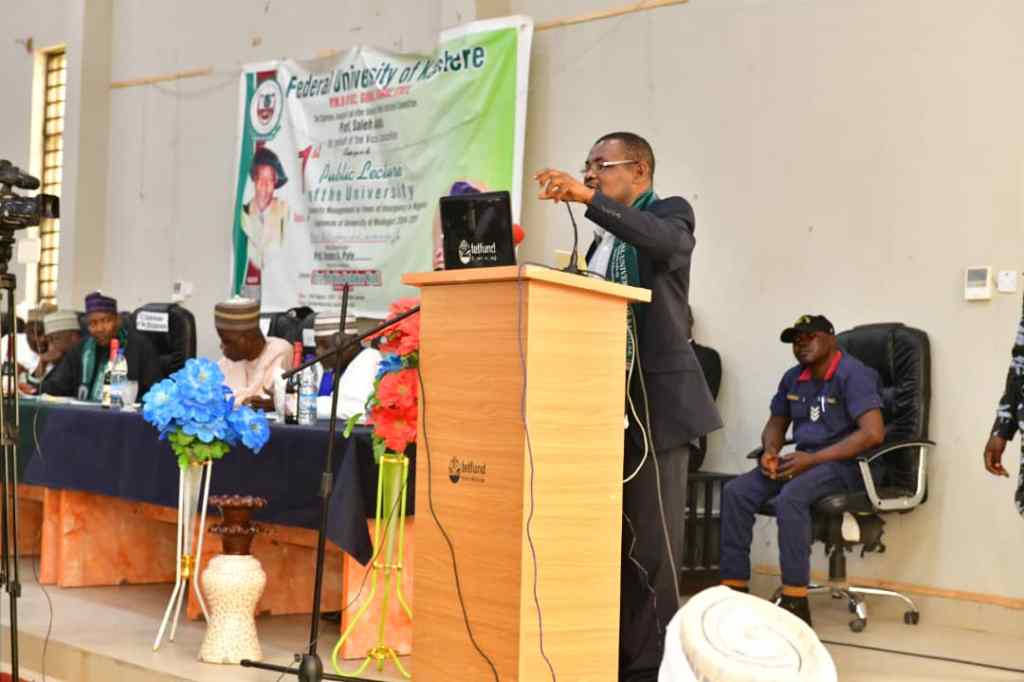
These colossal negative impact of the insurgency activities on the region compelled the University management under my watch to evolve new means of addressing the problems through the creation of new policies and strategies. It was then, that Icame to appreciate the real meaning of the adage that says, “Unusual problems require unusual solutions” and that which says “necessity is the mother of invention”. We took unusually drastic measures to ensure that the University operates and function. Some of these measures include:-
All Governing Council meetings/functions were held in Abuja.
Senate resolved to keep the University open and functioning. A decision adjudged to be as a result of doggedness, resilience and suicidal commitment. The Federal Ministry of Education could not understand why the institution refuse to close amidst unbaiting deadly attacks on the campus by the insurgency.
We resolved to maintain a stable academic calendar.
All social gatherings including sports were suspended.
All extra curricula academic activities such as Inaugural and public lectures were suspended.
Senate meetings were suspended and in its place a Senate Business Committee was constituted, mandated, enlarged and invigorated to handle all Senate Business matters for the consideration of the Chairman of Senate.
Top Management Committee was enlarged and met weekly to review situations.
The Committee of Provost, Deans and Directors was strengthened to meet at least monthly to consider submissions of Top Management Committee and also review submissions to the Governing Council.
Computer Based Tests, popularly called e-examinations were introduced and encouraged to avoid delay in the conduct of examinations and large crowd that may attract the attention of suicide bombers.
All outstanding and unsigned Certificates were signed and made ready for collection by Graduands. None issuance of certificates was a frustrating situation.
All Guests Houses on campus became temporary staff quarters.
More students were allowed into the hostels on campus. A typical room normally for six (6) students had to accommodate an average of ten (10) students.
The University sort for and was granted a temporary status of an Internally Displaced Persons Camp (IDP) largely because many people moved into the campus for safety. A house for six (6) people was essentially occupied by an average fifteen (15) people. All forms of services and utility facilities were over stretched.
4.0 SOME NECESSARY DRASTIC SECURITY MEASURES
In war-like situations such as the Boko Haram Terrorism, some unusually painful and drastic measures were necessary to save lives and property. This is more so since the terrorists employ different types of tactics to cause harm including death to innocent people. As Vice Chancellor, after wide consultations with the University security committee, I directed the closure of all major and pedestrians entry gates into the University except one. This allowed only University staff to come into the University using vehicles. At the height of bombing attacks and fears, staff members were not allowed to go out with their vehicles. They were mandated to park their vehicles within the University premises, and use other means of transportation to attend to their demands outside the University.
Similarly, students and visitors were not allowed to come into the campus with their cars or any means of transportation. Cars were parked outside the campus, and all pedestrians were thoroughly searched for any suspicious items in pockets, in clothes and in bags. At a point, even big veils and khimaar were temporarily banned. All types of bags were prohibited and banned. All other considerations were put aside, after all only the living can enjoy life including practising any religious obligations.
Mr. Chairman, Distinguished guests, Ladies and Gentlemen, our situation was so dire, confusing, difficult and traumasing that we requested for the presence of the conventional security personnel in addition to the University internal security men to beef up the security network on campus. The soldiers, mobile policemen, DSS, and even the Air force numbering over 300, were brought into patrol and man the perimeter fences of the University. The University is on a 9 kilometre radius piece of land, most of which was porous, without fence. We discovered that the Boko Haram used the immediate bushes close to the University as their routes to and from Sambisa Forest.
Using my connections with the then Chief of Army Staff and also the Chief of Air Staff, both of who are Alumni of the University of Maiduguri (Maid in Unimaid product), we secured their sympathy and support to secure the University and save it from any harm. While the Soldiers were visibly strategically stationed in their surveillance tranches, towers and tangos, the airforce provided a 24 hours aerial surveillance. The DSS deployed their men to provide 24 hours support and surveillance. The University security men were mandated to provide presence to monitor security situations all over the campus including the academic areas, offices, hostels, lecture rooms, halls and theatres. As a further strategy to tackle easy access to the campus by the insurgents, three (3) separate tranches were created round the University perimeter fence covering about 19 kilometres. This according to the military, was to slow down a possible invasion of the University by the terrorists using vehicles.
Mr. Chairman, Distinguished Ladies and Gentlemen, my role as Vice Chancellor, (Commander-in-Chief) in all these was to coordinate, analyse, review and restrategize all security arrangements on a 24 hours basis. Consequently therefore, Sleep and food to me,were mere luxury rather than a necessity of life. My only preoccupation was how to ensure the safety of my staff members and students thereby allowing for smooth academic operations. While all these were happening, Inever lost site of our regulatory agencies (Federal Ministry of Education and the National Universities Commission), as well as the Borno State Government being our host. Situation reports were forwarded for noting and necessary directives. This helped to keep University of Maiduguri to remain on the MAP of Nigeria. We were not unmindful of the question that was often asked: Why can you close the University?
Indeed, the risky and suicidal decisions and policies we took such as not allowing the University to CLOSE FOR EVEN A DAY helped to stabilize the security situation and served as a clear case of DEFIANCE to the devastating ideals of Boko Haram which is against Western Education. I am today a PROUD MAN because the decision and actions we took, risky and dangerous as they were, have given rise to an atmosphere of new thinking in both government and civil society circles as to how best to address the Boko Haram insurgency, secure and restore lasting peace and prosperity in the region. More than ever before, the singular decision of the University Management not to close the institution because of Boko Haram has helped to provide the basis for the emergence of stronger synergy between governments and civil society organisations. The result today is the birth of citizens oriented projects and programmes such as rehabilitation/ constructions of housing, agriculture and road infrastructure, schools and other educational institutions across the North-East regions. Governance at both public and private domains has become very inclusive and security conscious. University of Maiduguri became a shining example of how to defy terrorism and extremism.
5.0 SUCIDE BOMBING AND THE PSYCHE OF STAFF MEMBERS AND STUDENTS
Mr. Chairman, Distinguished Professors, Ladies and gentleman. One of the most asked questions is how were you able to handle or manage the cases of suicide bombing on campus? First of all we need to understand what suicide bombing is and why the extremist/Terrorist use it. Suicide bomb attack is carried out by a person, especially a terrorist, with the intention or expectation to kill themselves as well as other people. Suicide bombing is also defined as an act in which an individual delivers explosives and detonates them to inflict the greatest possible damage, killing himself or herself in the process. Suicide bombings are particularly shocking on account of their indiscriminate nature, clearly intending to kill or injure anyone within range of the explosion, the victims being mostly unsuspecting civilians and because of the evident willingness of the bombers to die by their own hands. Suicide bombing is deliberately employed by terrorist for calculated political effect. Indeed, because suicide bombers have the ability to move, avoid security measures, and choose their targets, they have been likened to a human “Smart bomb” or “poor man’s Smart bomb”. Many have fondly referred to suicide bombers as “Messengers of Death”. The act instills fear in even those not directly affected and directs attention to the cause. Suicide terrorism creates a sense of horror and fragility throughout the affected society.
Being in the epicentre of the Boko Haram insurgency in the North-East, University of Maiduguri Campus also experienced some devastating incidents of suicide bombing. The underlying intention was basically to instill fear and force the closure of the University. However, I must admit that our decision not to close came with a supreme prize. We lost a Professor of Veterinary Medicine, some members of academic and non- academic staff as well as students to the Suicide bombers. In all, the total number of death stood at nine (9). It would be noted that in all the cases of Suicide bombing, the terrorists were also killed.
Distinguished guests, ladies and gentleman, I must admit that the Suicide bombing activities really traumatized me as the head of the party and indeed sometimes left me helpless but most importantly dogged resolute and focused to absorb the menace of the insurgents. We lost some of our finest brains in Geology and Geo-Sciences while carrying out some NNPC sponsored baseline researches for the exploration of oil and gas products around the Lake Chad area (Gajiganna). In the incident we lost three (3) academic staff and three (3) drivers and scores of security personnel in what appeared to have been an ambush and possible sabotage against the country Nigeria, which merely took advantage of the Boko Haram insurgency.
As a Vice Chancellor, the suicide bomber that killed the Professor of Veterinary Medicine exploded just one street away from the VC’s official residence. The bomb shock the building and left my family membersscampering and confused. It happened in the early morning when Muslims were in the Mosque performing the early morning prayers. I was also praying in a Mosque in the VC’s official residence. Some conspiracy theorists have tried to link the early morning suicide attack to a possible attempt to eliminate the Vice Chancellor. While sympathizing and condoling the families of the deceased, I remain grateful to God for sparing my life to share the story of our ordeals, and how were managed Unimaid with you today.
6.0 SOME EXTRA ORDINARY STRATEGIES TO PREVENT ATTRITION OF STAFF DURING THE INSURGENCY
Mr. Chairman, Distinguished Professors, Guests, Ladies and Gentlemen, you will recall that I had earlier said that some unusual situations require unusual strategies and solutions. As the one in the driver’s seat in our struggle to mitigate the devastaging impact of the Boko Haram activities on our psyche and by implication, the general academic atmosphere, I decided to adopt some critical strategies to help contain the serious cases of attrition of staff from the University of Maiduguri.
Understandably so, some of our colleagues felt sufficient threatened and scared to remain in Maiduguri as the insecurity situation escalated. I decided on an aggressive approach to ease the rigorous procedures for employment of Professors and other senior Academics. I also encouraged and hasten the process of staff promotion and remuneration. Promotion of staff for Professorial Cadre received my special attention. I decided to personally call the would-be external assessors to plead for understanding and request them to expedite the assessment and return not later than three (3) months. This helped to fast-track the process of promotion thereby helping to keep most of the senior academics. I made sure that payment of arrears and implementation of the promotion benefits were taken seriously.
In addition, housing for our Professors received the highest priority. New houses were constructed and the existing ones were rehabilitated to meet the minimum standard for a Professorial quarters. I deliberately encouraged and engaged our senior colleagues in extra-curricula assignments within and outside the University, some even outside the country. I did everything possible to encourage teamwork where everybody felt as a member of the Unimaid family. I liberalized the process of engaging sabbatical and visiting Lecturers to the University. Those coming were given the option of travelling by air to help allay the fear of the unknown while coming by road. These were costly ventures, but they appeared to be the best option in our circumstance. Sabbatical and visiting staff members were given accommodation on campus. Our Commercial Guest Houses were converted to living houses. We requested NUC to grant Unimaid waiver for academic programme accreditation.
These and many other strategies and incentives helped to contain the cases of attrition among our academic and non-academic staff members, and thereby salvaging our academic.
7.0 THE PLACE OF STUDENTS IN THE STRUGGLE TO KEEP UNIMAID OPEN
The fight against terrorism requires all hands to be on deck. You can help reduce the chances of a terrorist attack by enlisting everybody to keep an eye out for suspicious situations, such as an unattended suitcase or bag or someone with a conspicuous level of interest in specific buildings such as lecture halls/theatres, hostels, staff quarters etc. With these in mind, I decided to engage and involve the students, after all as their “in loco parentis”, I must do everything possible to keep them safe. The welfare of students became my number one priority. I personally visited them in their hostels, eating and exchanging pleasantries with them. Going round Classes, Lecture halls and Lecture theatres to observe my students became a routine. I took turns in engaging some of them in conversation. I deliberately choose to dress in jeans, T-shirts and face caps as means of showing to most of the students.
Mr. Chairman, Distinguished Guests, Ladies and Gentlemen, these simple gestures were openly and genuinely appreciated by the students. They saw in the Vice Chancellor someone who cares and understand their worries. Apart from keying into the fight against insurgency, the students supported most of the policies/strategies put in place such as the uncompromising academic calendar and the e-examination. Students jealously supported these and did their best to report any suspicious person that could harm the system thereby affecting the academic calendar.
I make bold to say that my students were my greatest assets in my resolve to courageously defy the Boko Haram antics. The thought of my students was akin to the thought of my biological children. Some of you that are here with us please know that I STILL LOVE YOU ALL. I call on all of you to productively and jealously guard the experiences learnt from University of Maiduguri resistance anddefiance of the Boko Haram to redefine our paradigm for countering extremism and terrorism around the world in a manner that is both comprehensive and cost-effective.
8.0 ENGAGING STAFF AND STUDENTS UNIONS AND ASSCIATIONS
Managing a University in times of crises such as the Boko Haram Insurgency requires an all-inclusive approach. In essence, the University Manager must carry every individual, groups, unions and associations along. You cannot afford any dissent or divergence. My office as well as my official residence were kept widely open to unions and associations. This singular gesture helped to contain any misunderstanding and distractions in managing our situation.
Apart from providing the much needed synergy among all interest groups in the University, the strategy served as one of the most potent and productive surveillance initiative. Unions/Associations leaders were fully engaged and involved in sustained surveillance for any suspicious people, actions and behaviours. Our experience revealed a close alliance between Unions and our internal security networks. Our surveillance reports were forwarded to the larger national security network for scrutiny and necessary follow-up.
The full compliance of staff and students to the new situations has earned the University of Maiduguri the respect of all and sundry. The slogan of being the most difficult and harsh environment/institution to study was fondly appreciated by the students. Accordingly the coinage of the slogan IF YOU WANT TO BE MADE, COME TO UNIMAID!!! Became popularly and inspiring. This is because only the courageous, fearless, focused and dogged can study at UNIMAID.
9.0 CONCLUSION
Boko Haram insurgency activities have no doubt changed the dynamics of live and living standards of the people of the North-East region as well as the act of governance in a very significant dimension. For the people of the region, life will never be the same again. For governments in the region, and the University of Maiduguri in particular, governance will continue to pose greater challenges that will require courage, creativity, patience, resilience and skilful statesmanship.
The Vice Chancellor, apart from the conventional duties of superintending over academic and research endeavours, staff and students affairs have an added responsibility of interfacing with the larger national security networks to fight terrorism and insurgency. On the whole, I can categorically say that, a new normal has emerged in the governance of higher institutions in the North- East region of Nigeria which will require far reaching paradigm shifts in the process of selecting and appointing University administrators. If the Maiduguri lessons are anything to go by, it will be right to conclude that University governance requires an extra-ordinary understanding of all the dynamics of evolving trends in the society, and most importantly, thinking outside the box.
THANK YOU.
Like,share and come back for more news update.
 Sahel Online News